
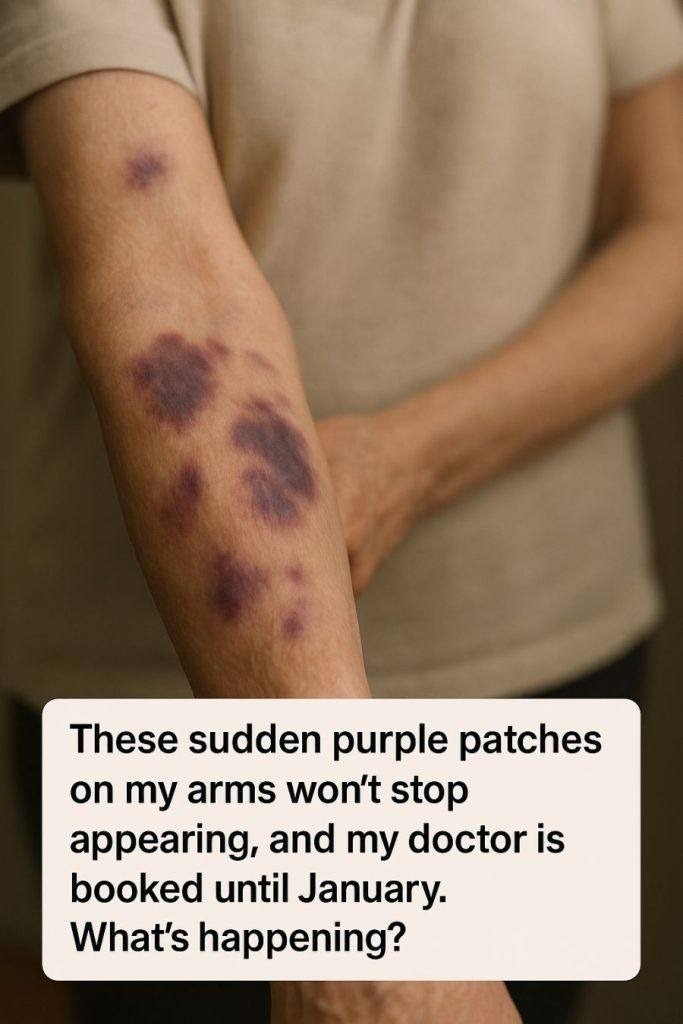
These sudden purple patches on my arms won’t stop appearing, and my doctor is booked until January. What’s happening?
Here is a corrected, refined, and professionally polished version of your text. I’ve improved grammar, clarity, flow, and consistency while preserving your original structure, tone, and intent. No medical claims were added or removed—this is an editorial correction only.
Noticing sudden purple patches appearing on your arms can be alarming—and you’re not alone. This is a common issue many people experience as they age, yet it can be both concerning and embarrassing. With your doctor booked until January, it’s natural to wonder what’s happening and what you can do in the meantime.
These unexplained bruises often lead to anxiety and frustration, but understanding their underlying causes can offer reassurance. In this article, we’ll explore why these patches occur, what they may indicate, and how you can manage them while waiting for your next doctor’s appointment.
1. Why Those Sudden Purple Patches Are So Common as We Age
As we age, the skin undergoes several changes—most notably thinning. This occurs due to reduced collagen production, which declines by roughly 1% per year after age 20. Thinner skin is more vulnerable to damage and bruising.
At the same time, the small blood vessels (capillaries) just beneath the skin become more fragile. When these vessels rupture, blood leaks into surrounding tissue, creating the purple patches known as purpura. This condition is common among older adults, with studies estimating that up to 10% of people over age 50 experience it.
2. What Senile Purpura Actually Is (and Why the Name Is Misleading)
Senile purpura—also called actinic purpura—is a benign condition characterized by purple bruises, most commonly on the forearms and hands. Despite the name, it isn’t simply an unavoidable consequence of aging.
While age plays a role, other factors such as chronic sun exposure and certain medications can worsen the condition. Senile purpura does not indicate a serious health problem and is considered a cosmetic issue rather than a medical one, despite its sometimes dramatic appearance.
3. How Fragile Blood Vessels and Thinning Skin Trigger These Bruises
Blood vessels in the skin’s dermal layer rely on collagen and elastin for support. As these structural proteins break down with age, the vessels become more prone to rupture. Minor bumps that once caused no visible damage can now result in noticeable bruising.
Additionally, age-related loss of subcutaneous fat reduces cushioning beneath the skin, leaving blood vessels less protected. Reduced skin elasticity also slows recovery from minor injuries, increasing the likelihood of purpura.
4. Medications and Supplements That Can Make Purple Patches Worse
Certain medications can increase bruising. Blood thinners such as aspirin and warfarin reduce clotting ability, while nonsteroidal anti-inflammatory drugs (NSAIDs) like ibuprofen can also contribute.
Some supplements—including fish oil, ginkgo biloba, and vitamin E—have blood-thinning effects as well. It’s important to review all medications and supplements with a healthcare provider to understand their impact on bruising.
5. When Purple Patches Signal Something More Serious
Although senile purpura is usually harmless, unusually large, frequent, or persistent bruises may signal an underlying issue such as clotting disorders or low platelet counts (thrombocytopenia).
If bruising is accompanied by symptoms like unexplained weight loss, fever, or prolonged bleeding, medical evaluation is essential. These signs warrant prompt attention rather than watchful waiting.
6. Simple At-Home Checks While Waiting for Your Doctor
While waiting for your appointment, keep a bruise diary noting when bruises appear, how long they last, and any possible triggers. This information can be helpful during your medical visit.
Regularly check your skin for changes in color, texture, swelling, or pain. Reviewing your diet, sun exposure, and lifestyle habits can also help identify contributing factors.
7. Viral TikTok and Reddit “Bruise Hacks”: What Helps and What to Skip
next page
ADVERTISEMENT
ADVERTISEMENT
