
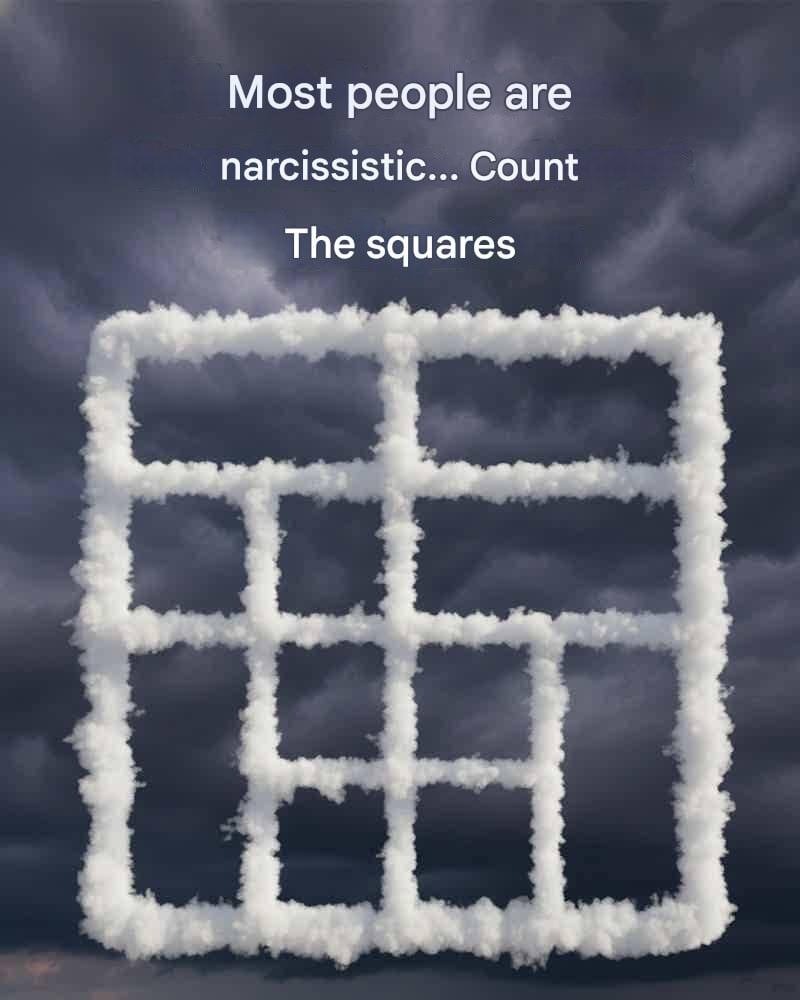
A small visual puzzle is circulating on the internet: it shows only a cloud silhouette filled with a square grid. It often appears accompanied by a striking statement: “Most people are narcissistic,” followed by the challenge: “Count the squares.”
This spectacular line is there only to attract attention. What this puzzle actually illustrates is much more universal: the way our minds interpret shapes, patterns, and the world around us.
Puzzles and Brain Teasers:
At first glance, most people only notice the smallest squares in the grid. This reaction is natural. The human brain tends to focus on the simplest and most obvious details before grasping the overall structure. This puzzle reveals nothing about personality. It simply illustrates how perception works and how easily we draw hasty conclusions from the first thing we see.
The more people try this puzzle, the more striking the diversity of responses becomes. Some only count the nine small squares. Others begin to notice medium-sized shapes, or even a single larger square created by the grid.
Some people catalog all possible variations: small, medium, large, and all those formed by overlapping lines. The diversity of responses highlights an important point: everyone processes visual information differently, and no two minds ever work in exactly the same way.
This kind of exercise invites us to pause and broaden our perspective. Often, the final number of squares turns out to be higher than expected. This surprise is an integral part of learning. It reminds us that hasty conclusions can make us overlook important details. Taking our time and observing carefully often reveals unexpected information.
In today’s fast-paced world, where information pops up instantly and distractions compete for our attention, this simple puzzle gently reminds us of the importance of not focusing too much on a single element, lest we miss the whole picture.
The cloud-shaped border adds to the complexity. Its soft, rounded outline conceals the sharp angles of the inner squares, making the overall structure more difficult to discern at first glance. It encourages the viewer to look beyond appearances and explore the pattern more closely.
Even after receiving the explanation of the exact number of squares, many people express surprise. They often realize how much they had overlooked the first time.
This reaction is common and reveals how limited our perception can be when we rely solely on instinct or hasty judgments.
More than anything, puzzles stimulate curiosity. They invite us to pay closer attention not only to what we see, but also to how we see it. Deepening our thinking, asking questions, and reconsidering our first impressions are valuable habits, both for puzzles and in everyday life.
Puzzles and brain teasers
A simple grid inside a cloud may seem insignificant, but the message it conveys is much deeper: by broadening our perspective, we gain a clearer view of the world.
ADVERTISEMENT
