
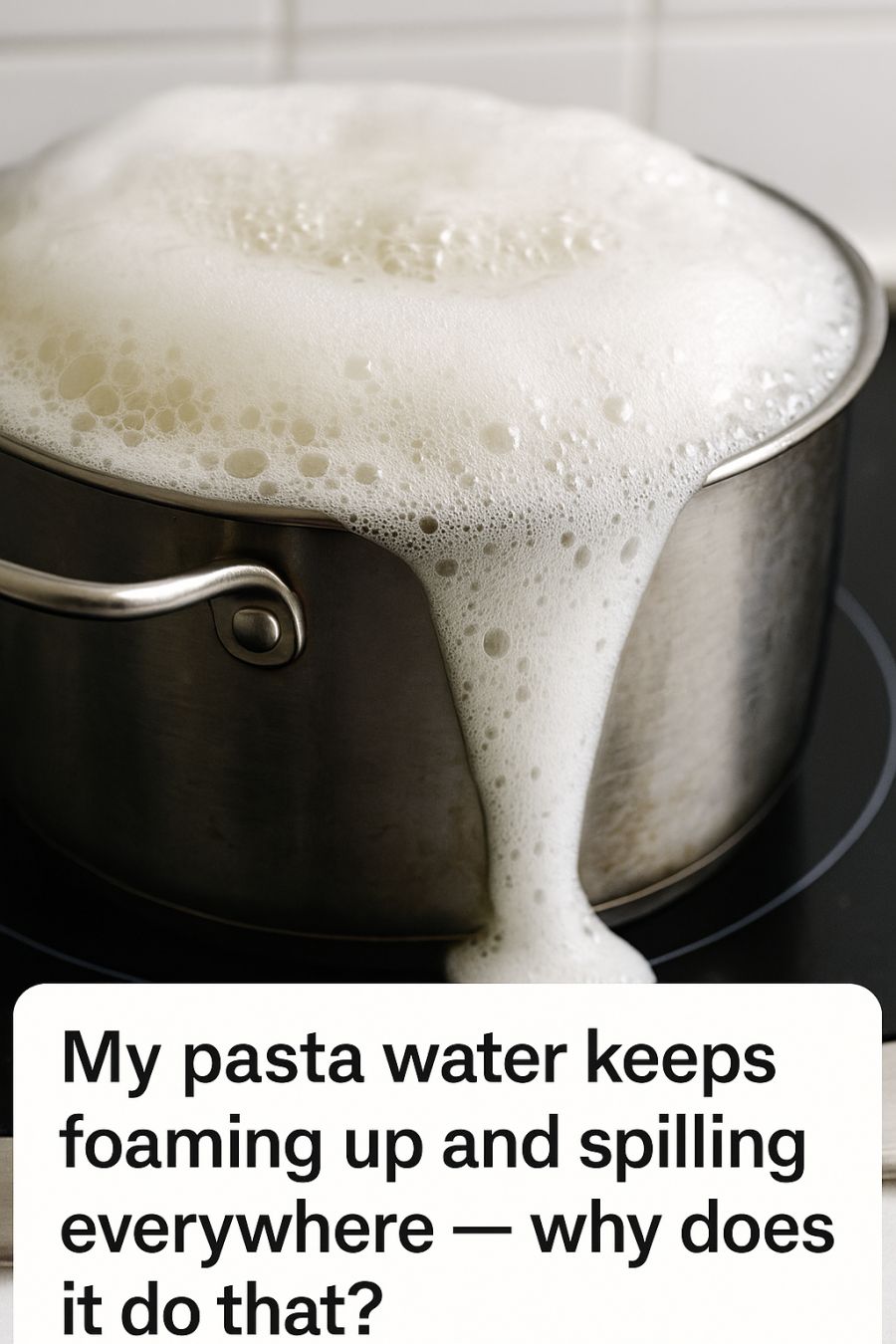
Cooking pasta is a common activity in many households, offering a quick and satisfying meal option. Yet, despite its simplicity, many home cooks encounter an annoying problem: the pasta water foams up and spills over the pot, creating a messy stovetop. This frustrating phenomenon can seem unavoidable, but understanding the science behind it can help prevent these boil-overs in the future.
In this article, we’ll explore the reasons why pasta water tends to foam and spill, examining everything from the pasta’s composition to the type of stove you’re using. By learning more about the dynamics at play, you can take steps to reduce the foam and maintain a cleaner cooking environment.
1. What’s Actually in That Cloudy, Foamy Pasta Water?
The cloudy appearance of pasta water is primarily due to the starch that leaches out from the pasta during cooking. As the pasta cooks, the starch molecules absorb water and swell, releasing some of their contents into the water. This starch release is what gives the water its cloudy and foamy appearance.
In addition to starch, pasta water may contain small amounts of proteins and minerals from the pasta itself. These additional components can combine with the starch to enhance the foaming effect, especially if the pasta is made from enriched or whole grain varieties, which tend to release more proteins and minerals.
2. How Starch Turns Boiling Water Into a Sudsy Volcano
When pasta is added to boiling water, the heat causes the starches in the pasta to gelatinize and dissolve into the water. As the water continues to boil, the agitation creates bubbles, and the starch acts as a stabilizing agent for these bubbles, making them last longer and build up as foam.
This process is similar to soap creating bubbles in water. The starch molecules form a film around each bubble, preventing it from popping immediately. As a result, the foam increases in volume and can easily spill over the sides of the pot, especially if the water is at a rolling boil.
3. The Role of Proteins and Impurities in Making More Foam
Proteins present in the pasta, especially in whole grain or enriched types, can enhance foaming. Proteins can unfold and interact with starch, creating a more stable structure for the bubbles. This means that pasta with higher protein content can lead to more foam.
Impurities in the water, such as calcium or magnesium salts found in hard water, can also impact foaming. These minerals can interact with starch and proteins, potentially increasing foam stability, leading to more persistent and voluminous foam.
ADVERTISEMENT
ADVERTISEMENT
