
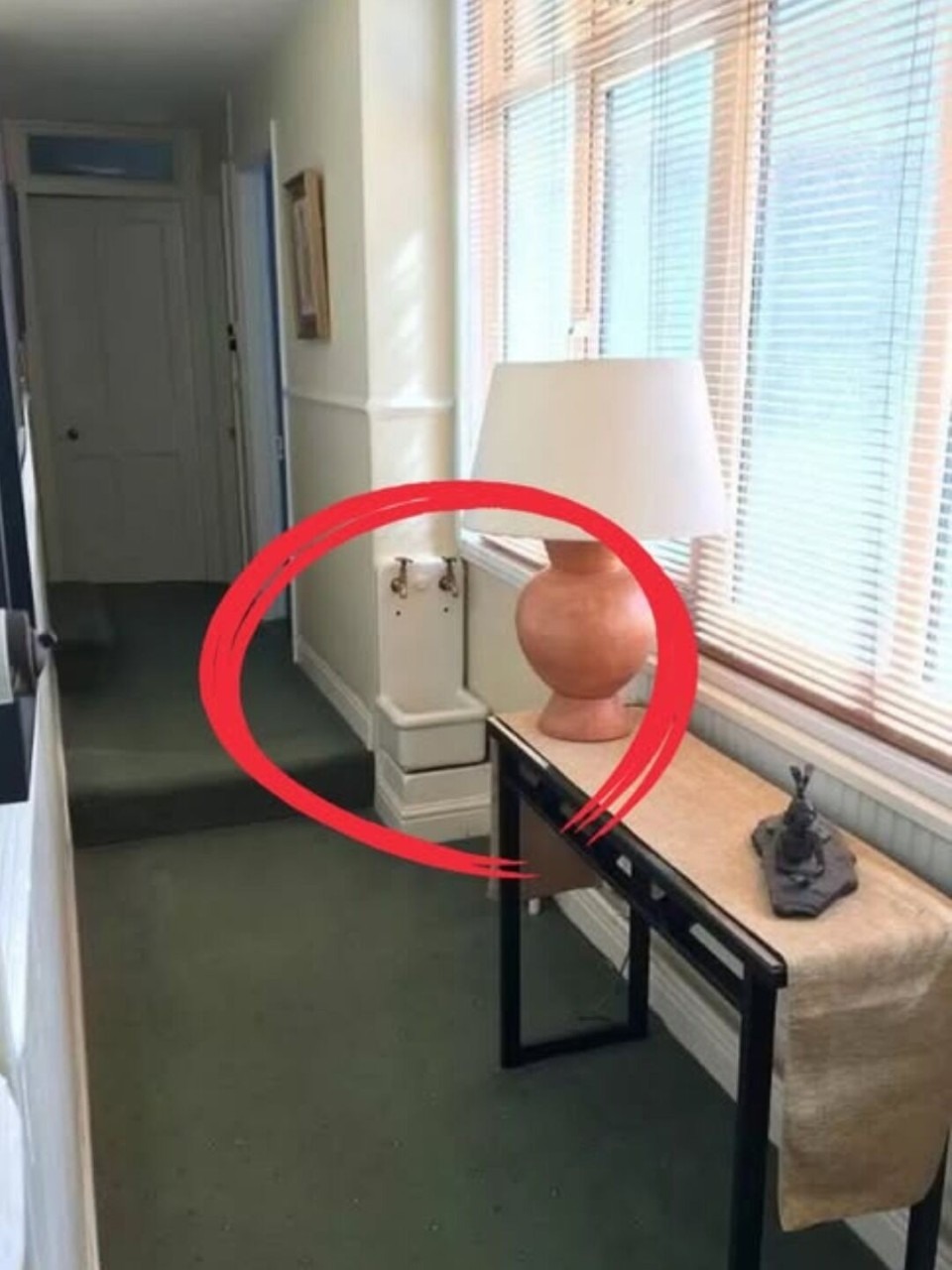
The utility of these fixtures was perhaps most appreciated by parents. In an era before paved suburban streets and manicured lawns, children spent their days in dirt, coal dust, and garden mud. The hallway sink allowed for a rapid “decontamination” process. Parents could supervise a quick cleanup without the chaos of a full bath, preventing the inevitable trail of footprints that would otherwise lead all the way to the second floor. These sinks were intentionally utilitarian; they often featured only a single cold-water tap and minimal piping, reflecting a design philosophy that favored function over form. They weren’t meant for shaving or long grooming sessions; they were meant for the brisk, cold-water rinse of a laborer coming in from the fields or a child coming home from school.
Furthermore, these sinks played a vital role in the morning routines of large households. With five or six people sharing a single upstairs bathroom, the “bottleneck” at the washbasin was a significant daily friction point. By installing a secondary sink in the hallway, the home’s “processing power” for morning hygiene was effectively doubled. One family member could brush their teeth or wash their face in the hall while another utilized the primary bathroom for more private matters. In this sense, the hallway sink was a precursor to the modern “jack-and-jill” bathroom or the contemporary en-suite, representing an early attempt to decentralize plumbing for the sake of efficiency.
ADVERTISEMENT
